My Neighbor Called CPS On Me Because I Let My 10-Year-Old Walk To School Alone
My neighbor called CPS because my ten-year-old daughter walks six blocks to school.
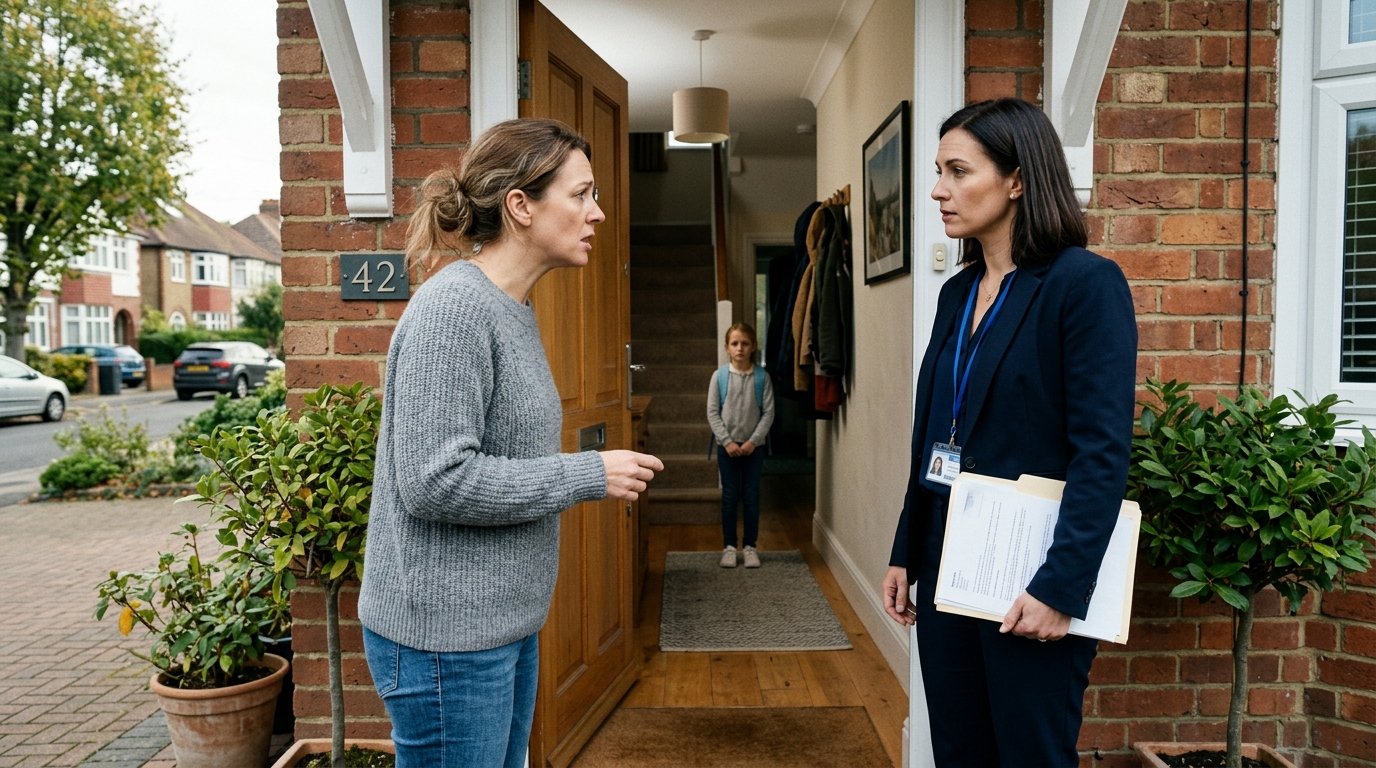
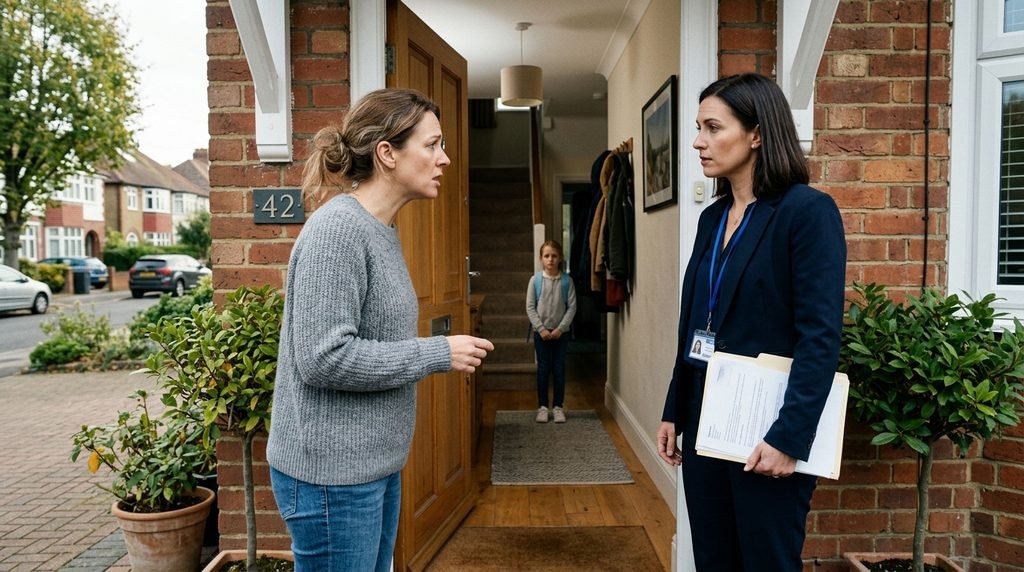
I found out when a social worker knocked on my door at 8:15 on a Tuesday morning.
She introduced herself and said she needed to speak with me about a report involving my daughter.
My first thought was that something terrible had happened at school.
Then she said:
“Someone reported concerns about your child’s supervision.”
I honestly thought she had the wrong house.
My daughter, Emma, is ten.
She’s responsible, careful and more mature than I was at her age.
Her school is six blocks away.
It’s a straight route.
There are sidewalks the entire way.
She crosses one relatively busy road at a marked crosswalk with a crossing guard.
We had practiced the route together dozens of times.
She also carries a phone and knows exactly what to do if something feels wrong.
For almost a year, she had been walking to school by herself.
Nobody had ever complained.
Until our new neighbor moved in.
Her name was Patricia.
She lived three houses down.
The first time she saw Emma walking alone, she stopped me.
“Where is her mother?”
I said:
“I’m her mother.”
Patricia looked surprised.
“You let her walk alone?”
“Yes.”
“She is very young.”
“She knows the route.”
Patricia shook her head.
“I would never allow that.”
I smiled politely.
“That’s fine. Different families make different choices.”
She didn’t smile back.
After that, she started making comments.
“You know there are predators everywhere.”
“Kids disappear every day.”
“Ten is very young.”
I thanked her for being concerned.
Then I stopped engaging.
A week later, Emma came home and told me Patricia had stopped her on the sidewalk.
She had asked Emma where her parents were.
Emma told her:
“I’m walking to school.”
Patricia apparently said:
“You shouldn’t be walking alone.”
Emma ignored her and continued.
I told Patricia directly:
“Please don’t stop my daughter on her way to school.”
She said she was only concerned about her safety.
I told her I appreciated the concern, but I was her parent and had made the decision carefully.
She responded:
“Sometimes parents don’t recognize when they’re neglecting their children.”
I didn’t think much of the comment.
Until CPS showed up.
The social worker asked me questions.
How old was Emma?
Did she have supervision?
How far was the school?
Did she know the route?
Did she have a phone?
What happened if there was an emergency?
I answered everything.
Then she asked to speak with Emma.
I agreed.
Emma came into the room.
The social worker asked her about her morning routine.
Emma explained it perfectly.
She woke up.
Got dressed.
Ate breakfast.
Texted me when she left.
Walked to school.
Texted me when she arrived.
The social worker asked:
“Do you feel safe walking by yourself?”
Emma said:
“Yes.”
“Does your mom ever make you do things you’re uncomfortable with?”
“No.”
“Are you afraid of her?”
Emma looked confused.
“No.”
The social worker smiled.
“Okay.”
Afterward, she asked me whether I knew who had made the report.
She couldn’t tell me.
But I already suspected.
Later that afternoon, Patricia knocked on my door.
She asked whether CPS had visited.
I stared at her.
“How do you know?”
She immediately became defensive.
“I was worried.”
“Did you report me?”
She didn’t answer.
That was answer enough.
I asked her why.
She said:
“Because a ten-year-old shouldn’t be wandering around alone.”
I told her Emma wasn’t wandering.
She was walking to school.
Patricia said:
“You’re putting her in danger.”
I replied:
“You don’t get to decide how I raise my child.”
She walked away.
I thought the situation was over.
It wasn’t.
A second report was made two weeks later.
This time, the allegation was more serious.
Patricia claimed Emma was frequently left alone for long periods.
That wasn’t true.
But CPS had to investigate.
The social worker came back.
She interviewed Emma again.
She spoke with her teacher.
She asked for emergency contact information.
She checked whether Emma had access to food.
She even asked about our home environment.
I cooperated completely.
But I was angry.
Not at the social worker.
She was doing her job.
I was angry that someone had weaponized a serious system against my family because she disagreed with my parenting.
Then I discovered something.
Our school had a parent volunteer program.
Patricia had apparently joined it.
She had access to the school’s morning arrival area.
One morning, she approached Emma again.
Emma came home upset.
“She said Mom doesn’t care about me.”
That crossed a line.
I contacted the school.
They already knew about Patricia.
Apparently, she had made comments to other parents about children walking to school.
The school principal told me they had received complaints about her behavior.
They also confirmed that Emma’s attendance, grades and school behavior showed no signs of neglect.
The CPS investigation was closed.
There were no findings of neglect.
The social worker told me that the walking arrangement itself wasn’t enough to establish neglect and that they had found no evidence of harm.
I was relieved.
But I wasn’t finished.
I filed a formal complaint with the school regarding Patricia’s interactions with Emma.
The school removed her from the volunteer program.
Then I installed a doorbell camera.
Not because I wanted revenge.
Because I wanted documentation if Patricia approached my daughter again.
She didn’t.
A few months later, I ran into her at the grocery store.
She looked uncomfortable.
She said:
“I hope you don’t hate me.”
I said:
“I don’t hate you.”
She looked relieved.
Then I added:
“But I don’t trust you.”
Her face fell.
I told her that if she genuinely believed Emma was in danger, she could have spoken to me.
Instead, she made a report based on her personal beliefs about parenting.
She said she understood.
Maybe she did.
Maybe she didn’t.
Either way, we haven’t spoken since.
Emma still walks to school.
She still texts me when she leaves and when she arrives.
We recently added another rule.
If any adult tries to stop her or question her, she calls me immediately.
Not because I want her to be afraid of strangers.
Because I want her to know she can always ask for help.
I’ve thought a lot about the situation.
Parents should absolutely take concerns about children’s safety seriously.
If someone genuinely believes a child is being harmed, reporting it is appropriate.
But there is a huge difference between witnessing actual neglect and deciding another parent is negligent because they make different choices than you would.
Patricia saw a ten-year-old walking six blocks.
She saw danger.
I saw a carefully practiced route, a responsible child and an opportunity for her to develop independence.
Both of us saw the same sidewalk.
We simply saw different things.
The difference is that I was the parent responsible for making the decision.
She wasn’t.
And now my daughter knows something she didn’t know before:
Growing up means gaining independence.
But it also means knowing exactly which adults have earned the right to tell you what to do.