My Husband’s “Business Trip” Was Actually A Weekend At His Ex-Wife’s House
My husband told me he was going to a work conference for the weekend.
I believed him.
Why wouldn’t I?
He had traveled for work plenty of times before.
He packed his suitcase Thursday night, kissed me goodbye Friday morning and told me he’d be back Sunday evening.
On Saturday afternoon, I checked his location because I wanted to know whether he had arrived safely.
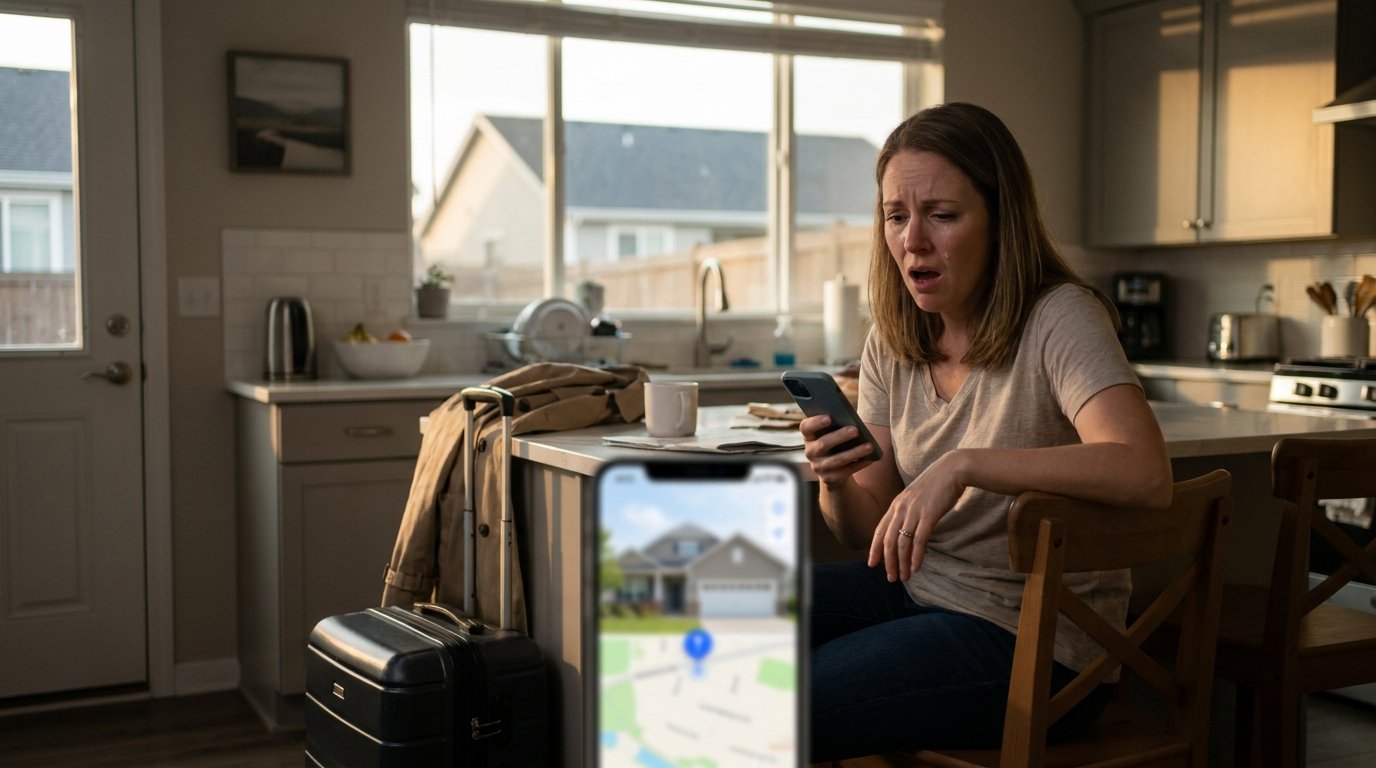
Instead, I watched the little blue dot sitting at his ex-wife’s house.
And it stayed there.
For almost forty-eight hours.
My husband, David, and I had been married for eight years.
He had been married once before.
His ex-wife, Sarah, was the mother of his two children.
I had always respected that relationship.
They needed to communicate because of the kids.
I never expected them to become friends.
But I understood that they would always be connected.
For years, David told me their relationship was completely over.
“She’s the mother of my kids. That’s all.”
I believed him.
There had never been an obvious reason not to.
When he traveled for work, I rarely asked questions.
He would send me pictures from airports or conference rooms.
He’d complain about hotel food.
Sometimes we’d talk before bed.
It seemed normal.
The weekend everything changed started like any other business trip.
Friday morning, he left.
He told me the conference was in another city about three hours away.
I had plans with a friend that afternoon, so I didn’t think much about it.
Around 3 p.m., I received a notification from our shared location app.
David’s location had updated.
He was at a residential address.
I recognized it immediately.
Sarah’s house.
I stared at the screen.
Then I checked again.
Maybe the location was wrong.
Maybe the app was glitching.
I waited.
Thirty minutes.
Still there.
Two hours.
Still there.
That evening, I called him.
He answered.
“How’s the conference?”
“Exhausting.”
I asked:
“Where are you staying?”
He gave me the name of a hotel.
I looked at the location.
It was twenty minutes from Sarah’s house.
“Are you sure?”
“Of course.”
I didn’t confront him.
I simply said goodnight.
Then I watched the location.
He stayed at Sarah’s house overnight.
Saturday morning, he texted me:
“Conference all day. Might be hard to call.”
I replied:
“No problem. Hope it goes well.”
I spent the entire day trying not to look at the app.
I failed.
Every few hours, I checked.
He didn’t leave.
At 8 p.m., he was still there.
That night, I barely slept.
Sunday morning, I finally called him.
He answered from somewhere quiet.
“Hey.”
“Where are you?”
“At the hotel.”
I said:
“David, your location has been at Sarah’s house since Friday.”
Silence.
Not confusion.
Not surprise.
Silence.
Then he said:
“The app must be wrong.”
I laughed.
“You’ve been at the wrong location for two days?”
He didn’t answer.
I asked:
“Are you having an affair with her?”
He said no.
I asked him to come home.
He returned Sunday evening.
He walked through the door carrying his suitcase.
I was sitting at the kitchen table.
“Tell me the truth.”
He sat down.
Then he admitted he had lied.
There had been no conference.
He had gone to Sarah’s house.
But he insisted they weren’t having an affair.
I asked why he spent the weekend there.
He said Sarah had been going through a difficult situation.
“What situation?”
He wouldn’t tell me.
I became furious.
“You lied to me about an entire weekend.”
“I know.”
“You told me you were at a work conference.”
“I know.”
“You stayed at your ex-wife’s house.”
“I know.”
Then he said:
“I was trying to protect you.”
I hated that sentence.
People always say they’re protecting you when they’re actually protecting themselves.
Eventually, the full story came out.
Sarah had been diagnosed with a serious illness.
Their children knew.
David had found out a few weeks earlier.
She had asked him not to tell me because she was embarrassed and didn’t want me involved.
He had been helping her with the kids.
He had taken them to appointments.
He had stayed at the house because she had needed help that weekend.
I sat there silently.
I wanted to be angry.
But suddenly I didn’t know who I was angry at.
I asked:
“Why didn’t you tell me?”
He said:
“Because I knew you’d want to help.”
“That sounds like a good thing.”
“I didn’t want you pulled into it.”
I asked whether they had been intimate.
He said no.
I believed him.
But the lie still mattered.
I told him:
“You didn’t just hide where you were. You made me believe something completely different.”
He apologized.
Then I asked to see the conference information.
There was none.
No registration.
No hotel.
No work emails.
Because there had never been a conference.
He had used the lie so casually that it made me wonder what else he had lied about.
We went to counseling.
For months, I struggled with trust.
Sarah’s illness became more serious.
I eventually met her.
That conversation was difficult.
She apologized for asking David to keep the truth from me.
She said she never intended to create problems in our marriage.
I told her the problem wasn’t her.
It was the lie.
She nodded.
Then she said something I didn’t expect.
“David has always been terrible at handling guilt.”
I laughed.
That was the most accurate description of my husband I had ever heard.
He had lied because he felt guilty about helping Sarah.
Then he lied again because he felt guilty about lying.
Then he tried to hide everything because he was afraid of what I would think.
None of it made the original lie better.
Eventually, Sarah’s condition improved enough for her to return to work.
Our marriage survived.
But our rules changed.
We stopped sharing location as a way to monitor each other.
We started communicating directly.
If either of us needed to help someone from our past, we talked about it.
No secret trips.
No fake conferences.
No “I’m protecting you” excuses.
A year later, David had another trip.
He came downstairs with his suitcase.
He looked at me.
“Work conference.”
I raised an eyebrow.
He immediately laughed.
“Yes, an actual work conference. You can check the registration if you want.”
I laughed too.
The situation had become a running joke between us.
But underneath the joke was a lesson we both understood.
I initially thought I had caught my husband cheating.
What I actually caught was something slightly different.
He had allowed fear to turn into secrecy.
And secrecy can destroy trust almost as effectively as betrayal.
I don’t regret checking his location that weekend.
Not because I want to monitor him.
Because without that blue dot on my screen, I might never have asked the question.
Sometimes the truth doesn’t arrive as a confession.
Sometimes it’s just a tiny notification that doesn’t match the story you’re being told.
And when the two don’t match, you owe yourself an explanation.