My Best Friend’s Mom Told Me I’m A Bad Influence And My Friend Shouldn’t See Me Anymore
I honestly thought Mrs. Carter liked me.
I’d known her daughter, Emily, for almost nine years. We met in middle school, survived high school together, went to different colleges, and somehow stayed inseparable. I was the person Emily called when she was crying, when she got dumped, when she got promoted, and even when she just couldn’t decide what to order for dinner.
So when her mother suddenly asked me to come over one Saturday afternoon, I assumed she wanted to talk about Emily’s upcoming birthday.
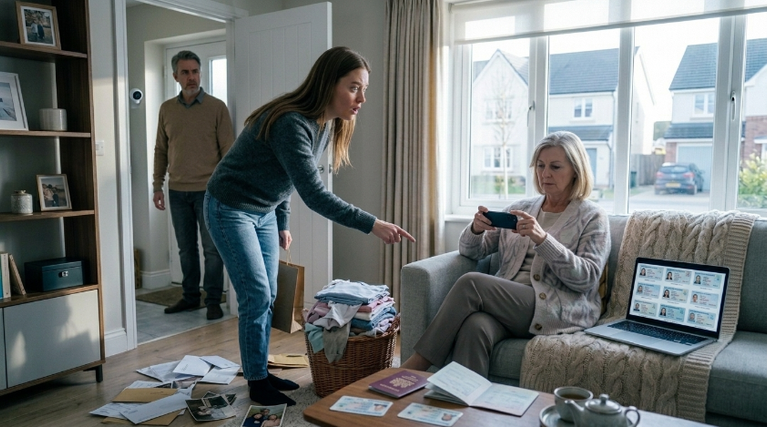
Instead, she closed the front door behind me and said, “You need to stop seeing my daughter.”
I actually laughed because I thought she was joking.
She wasn’t.
She told me I was a “bad influence” and that Emily had become “reckless” since we became friends. According to her, I encouraged Emily to question her family, spend money irresponsibly, and make decisions without asking her parents.
The weirdest part was that most of it wasn’t even true.
Emily was 27 years old.
She had her own apartment, her own job, and paid her own bills.
I asked Mrs. Carter what exactly I’d done.
She wouldn’t give me a straight answer.
Instead, she said, “You know what you’ve been doing.”
I left angry and confused.
When I told Emily, she immediately defended me.
She said her mother had been acting strangely for months and apologized for what happened.
Then she said something that stuck with me.
“Mom has been asking me weird questions about you.”
“What kind of questions?”
Emily hesitated.
“Where you work. How much you make. Whether you’re planning to move. Whether you have savings.”
That was strange, but I didn’t think much of it.
Then the little clues started appearing.
Emily’s mother somehow knew about a vacation we’d taken that I hadn’t posted publicly. She knew I’d been looking at apartments in another city. She even knew I’d recently received a raise.
None of that made sense.
Then, one evening, Emily called me crying.
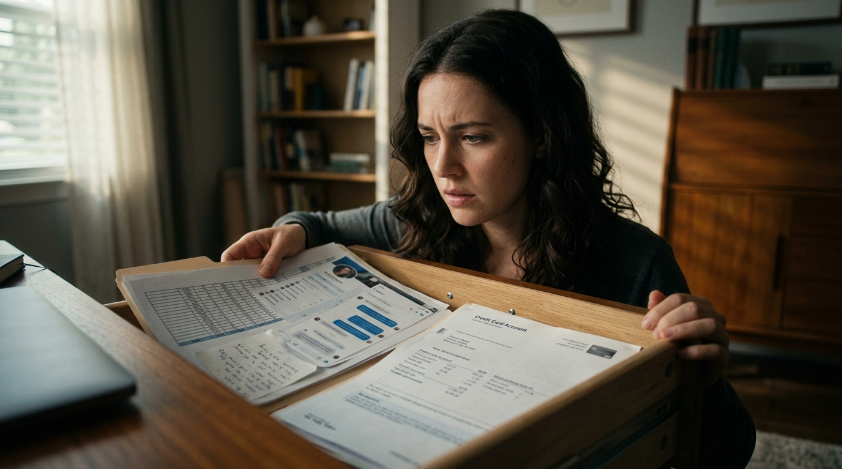
She’d found an envelope in her mother’s desk.
Inside were printed screenshots of my social media accounts, old messages between Emily and me, and even copies of conversations we’d had about my finances.
There was one more thing.
A spreadsheet.
It contained my name, my workplace, my approximate salary, my savings goals, and notes about people I was supposedly “influencing.”
Emily confronted her mother.
That’s when the truth finally came out.
Her mother wasn’t worried about me being a bad influence.
She was worried I was going to convince Emily to move out of state.
Apparently, Emily’s parents had quietly been depending on her financially. Emily had been paying several of their bills without realizing how much of their lifestyle depended on her money.
Her mother knew that if Emily moved away, the money would stop.
So she decided to make me the villain.
The final twist came a week later.
Emily checked her credit report.
Her mother had opened a credit card in Emily’s name two years earlier.
And the payments were being made with money Emily had been sending her parents every month.
Suddenly, everything made sense.
I wasn’t the bad influence.
I was simply the person who made Emily realize she was allowed to have a life of her own.
And apparently, that was dangerous enough.