My Landlord Entered My Apartment With A Key While I Was At Work And Took Photos Of Everything
I knew someone had been inside my apartment before I found the note.
Something was different.
My bedroom door was open.
I always keep it closed.
The kitchen chair had been moved.
A cabinet was slightly open.
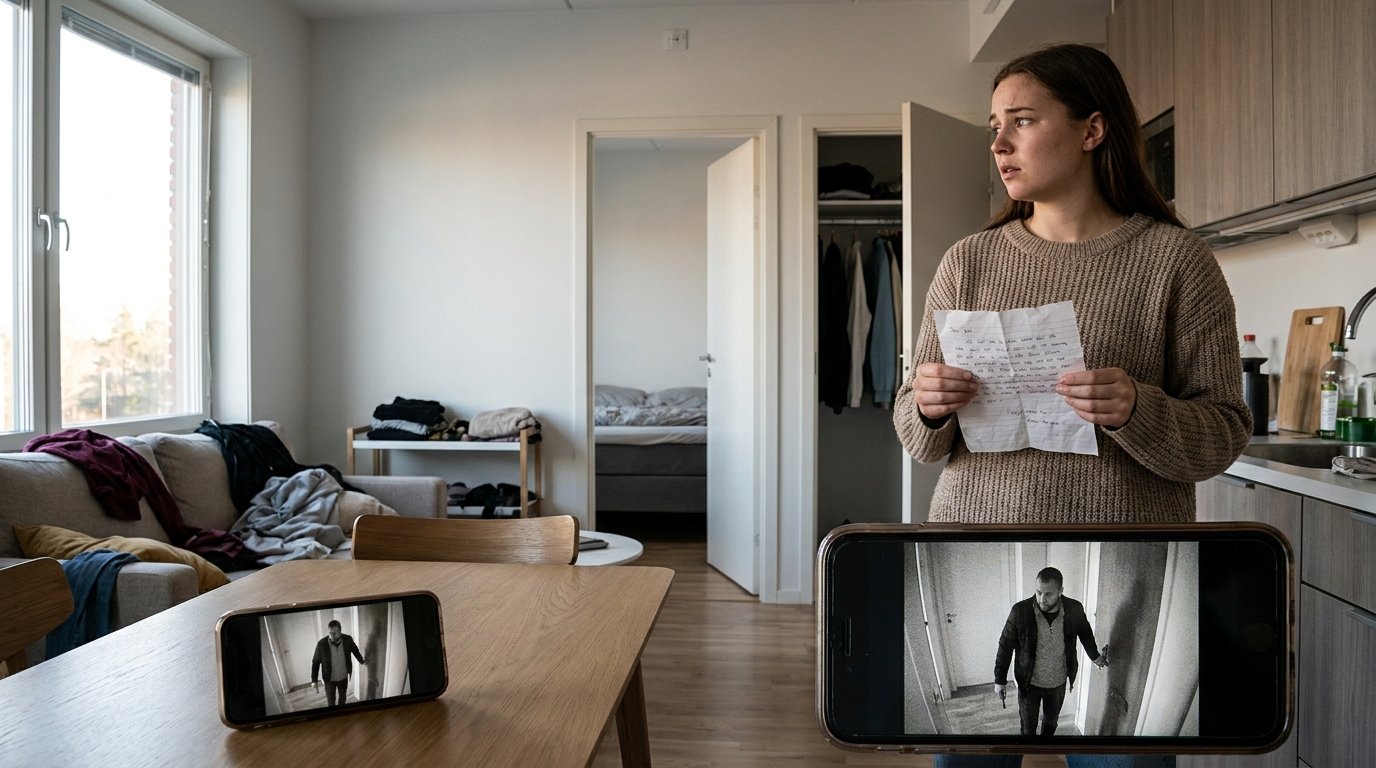
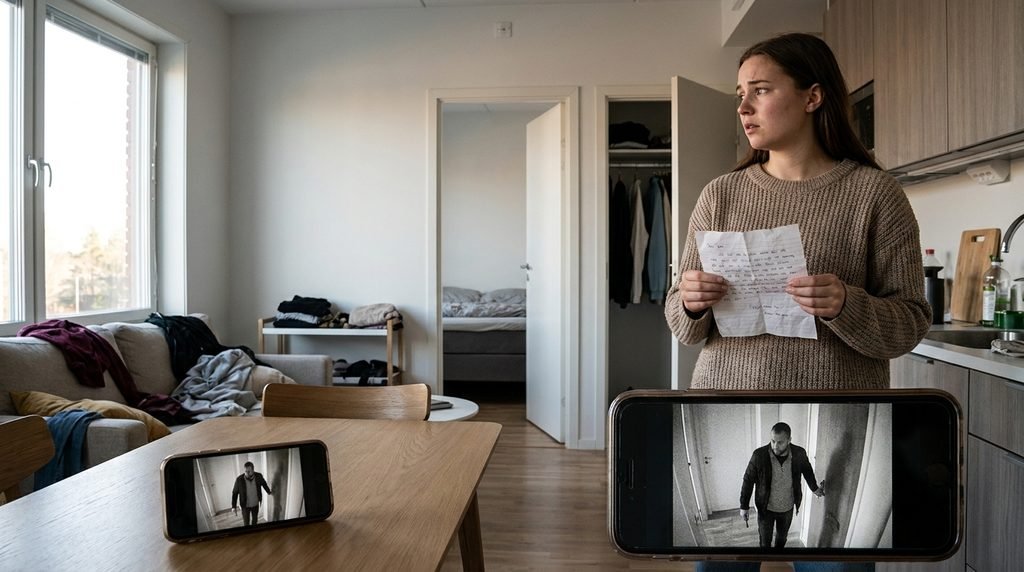
And there was a piece of paper sitting on my kitchen counter.
It said:
“Inspected apartment for possible lease violations.”
No phone call.
No warning.
No appointment.
Just a note from my landlord.
I stood in the doorway staring at it.
Then I noticed something else.
My closet door was open.
I don’t mean slightly open.
It was completely open.
My clothes had been moved around.
I checked my desk.
Then my bedroom.
Then the bathroom.
Nothing appeared to be missing.
But something felt deeply wrong.
My landlord, Mr. Harris, had never mentioned an inspection.
I’d lived in the apartment for almost three years.
He had entered before, but always after giving notice and arranging a time.
This was different.
I called him.
“Did you enter my apartment today?”
“Yes.”
“Why?”
“I was checking for lease violations.”
“You didn’t tell me you were coming.”
“I left a note.”
“After you entered.”
He became defensive.
“I own the property.”
I said:
“That doesn’t mean you can just walk in whenever you want.”
He told me he had concerns about the condition of the apartment.
I asked:
“What concerns?”
He said:
“We’ll discuss it later.”
Then he hung up.
I thought that was strange.
So I started looking around more carefully.
That’s when I noticed the photos.
There was a faint reflection on my television screen.
Someone had apparently taken a picture while standing in the living room.
I checked my apartment security camera.
I had installed one facing the front door after a previous package theft.
I opened the footage.
There he was.
Mr. Harris.
Using his key.
He entered at 10:14 a.m.
He stayed inside for almost forty minutes.
He walked through every room.
He opened closets.
He looked inside cabinets.
He took pictures with his phone.
Lots of pictures.
I watched the footage twice.
Then I called him again.
“You took photographs inside my apartment.”
He said:
“That’s part of the inspection.”
“Why did you photograph my bedroom?”
“I was documenting the condition.”
“My personal belongings aren’t the condition of the apartment.”
He didn’t answer.
I asked him to send me copies of every photograph.
He refused.
That made me even more suspicious.
I contacted the property management company.
They told me Mr. Harris was the owner and handled his own inspections.
I asked whether an inspection had been scheduled.
The employee checked their records.
“No.”
“Was one requested?”
“No.”
I asked whether there had been a complaint against my apartment.
She said there was nothing in the system.
That night, I started reading my lease carefully.
There was an inspection clause.
It allowed the landlord to enter with advance notice for legitimate reasons.
It didn’t say he could enter whenever he wanted.
I also contacted a local tenant assistance organization to understand my rights.
They explained that the exact rules depended on where I lived and the reason for entry, but landlords generally couldn’t treat ownership as unlimited permission to enter a tenant’s private living space.
They suggested documenting everything.
So I did.
I saved the security footage.
I photographed the note.
I wrote down the time.
I saved every text and email.
Then I waited.
Three days later, I received an email from Mr. Harris.
He claimed my apartment had several “lease violations.”
The first was that I had too many boxes.
The second was that I had stored bicycles inside.
The third was that my bedroom closet was “overloaded.”
The fourth was that I had “excessive personal property.”
I stared at that last one.
Excessive personal property.
Apparently, owning things was now a lease violation.
I asked him to identify the exact section of the lease that prohibited these items.
He didn’t respond.
Instead, he sent me a warning letter.
It said I had seven days to “correct the violations.”
I forwarded everything to the tenant assistance organization.
They helped me draft a formal response.
I disputed every alleged violation.
I also told him that future entry needed to comply with the applicable notice requirements.
Then I included a sentence:
“I have video documentation of your entry and photographs taken inside the apartment.”
His response came within ten minutes.
He asked:
“What video?”
I didn’t answer.
I didn’t need to.
A week passed.
Then he came to my door.
He was angry.
“You’ve made this unnecessarily difficult.”
I said:
“You entered my home without telling me.”
“I was inspecting my property.”
“I was at work.”
“You don’t own the air inside the walls.”
He stared at me.
Then he said:
“You’re going to regret making an issue out of this.”
I closed the door.
That sentence scared me.
So I started looking for another apartment.
Two weeks later, I received another letter.
This time, it was a notice about terminating my lease.
The reason was “repeated violations.”
I contacted the tenant organization immediately.
They reviewed the documents.
They told me not to panic.
They helped me respond formally and explained the steps available to challenge the notice under local rules.
I also discovered something unexpected.
Another tenant in the same building had received an almost identical notice.
Then another.
We compared notes.
Mr. Harris had been entering apartments while tenants were at work.
He had been taking photographs.
He had been sending vague violation notices afterward.
And the alleged violations were almost identical.
“Excessive belongings.”
“Improper storage.”
“Condition concerns.”
One tenant had challenged him.
That’s when we discovered what he was actually doing.
He wanted people out.
He was planning to renovate the building and raise the rents.
The inspections weren’t really about lease violations.
They were creating paperwork.
He wanted a record that made tenants look like problem tenants.
Once we realized that, several of us started communicating.
We documented every interaction.
The local housing office became involved.
After reviewing the complaints, they contacted Mr. Harris.
He suddenly became much less aggressive.
My lease termination notice disappeared.
He stopped claiming my apartment violated the lease.
And, most importantly, he stopped entering without notice.
A few months later, I moved anyway.
Not because he forced me out.
Because I didn’t want to live somewhere knowing the landlord could unlock my door whenever he felt like it.
Before I left, I requested a final inspection.
This time, I chose the date.
I was there.
I recorded the condition of the apartment.
Mr. Harris walked through every room.
He found nothing wrong.
At the end, he handed me a document confirming there were no outstanding violations.
I smiled.
“Could I get a copy?”
He looked annoyed.
“Yes.”
I kept it.
I also kept the original note he left after entering my apartment.
It’s still in a folder with the security footage and all the emails.
The thing that bothered me most wasn’t that he owned the building.
It was that he seemed to believe ownership meant privacy didn’t apply to the people living inside it.
But a home doesn’t stop being someone’s private space just because they pay rent.
I used to think the worst thing a landlord could do was raise your rent.
Now I think it’s something much simpler.
Making you wonder whether the sound of a key turning in your door means someone has decided they can walk into your life whenever they want.
My landlord had a key.
What he didn’t have was unlimited permission to use it.