My MIL Secretly Sold My Late Mother’s Jewelry And Bought Herself A New Car
I knew something was wrong when my mother-in-law suddenly stopped complaining about her old car.
For three years, that car had been her favorite topic.
Every family dinner included at least one comment about how unreliable it was.
“It won’t survive another winter.”
“The mechanic is practically living off me.”
“I swear, one day I’m going to turn the key and the whole thing will fall apart.”
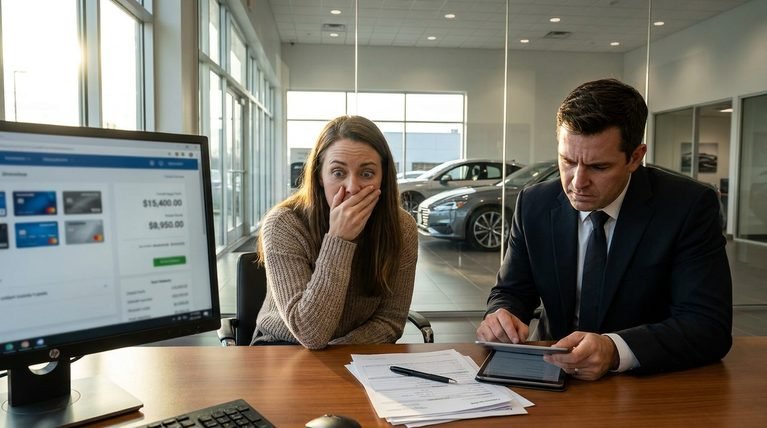
So when I walked into her driveway one Saturday morning and saw a brand-new luxury SUV sitting where her old sedan usually was, I assumed she had finally taken out a loan.
I even congratulated her.
She smiled.
“Your husband helped me with the down payment.”
I looked at my husband.
He looked confused.
“I did?”
His mother laughed.
“You’re so forgetful.”
That was the first lie.
The second came three days later.
And that one destroyed our marriage.
My mother died unexpectedly the previous year.
She had been sick, but we were told she had months left. Instead, we got three weeks.
After the funeral, I couldn’t bring myself to go through her things.
My mother had never been wealthy, but she had one collection she treasured: jewelry.
Not because every piece was expensive.
Most of it wasn’t.
Some pieces were costume jewelry. Some were silver. A few were gold. But almost everything had a story.
The little pearl earrings were from my father on their tenth anniversary.
The gold bracelet had belonged to my grandmother.
There was a sapphire ring my mother wore whenever she had an important meeting.
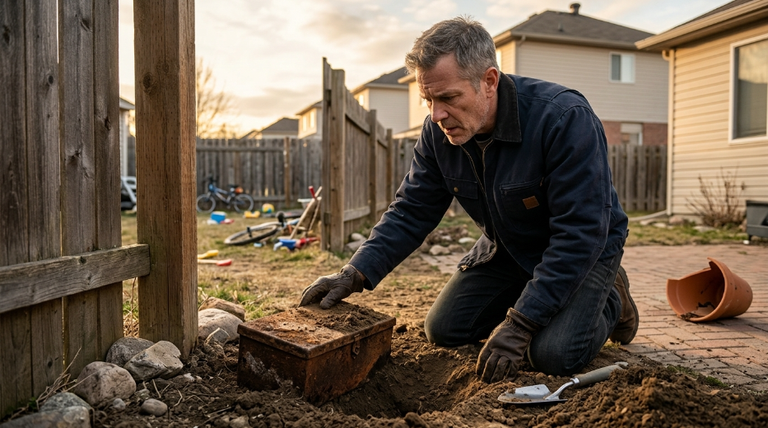
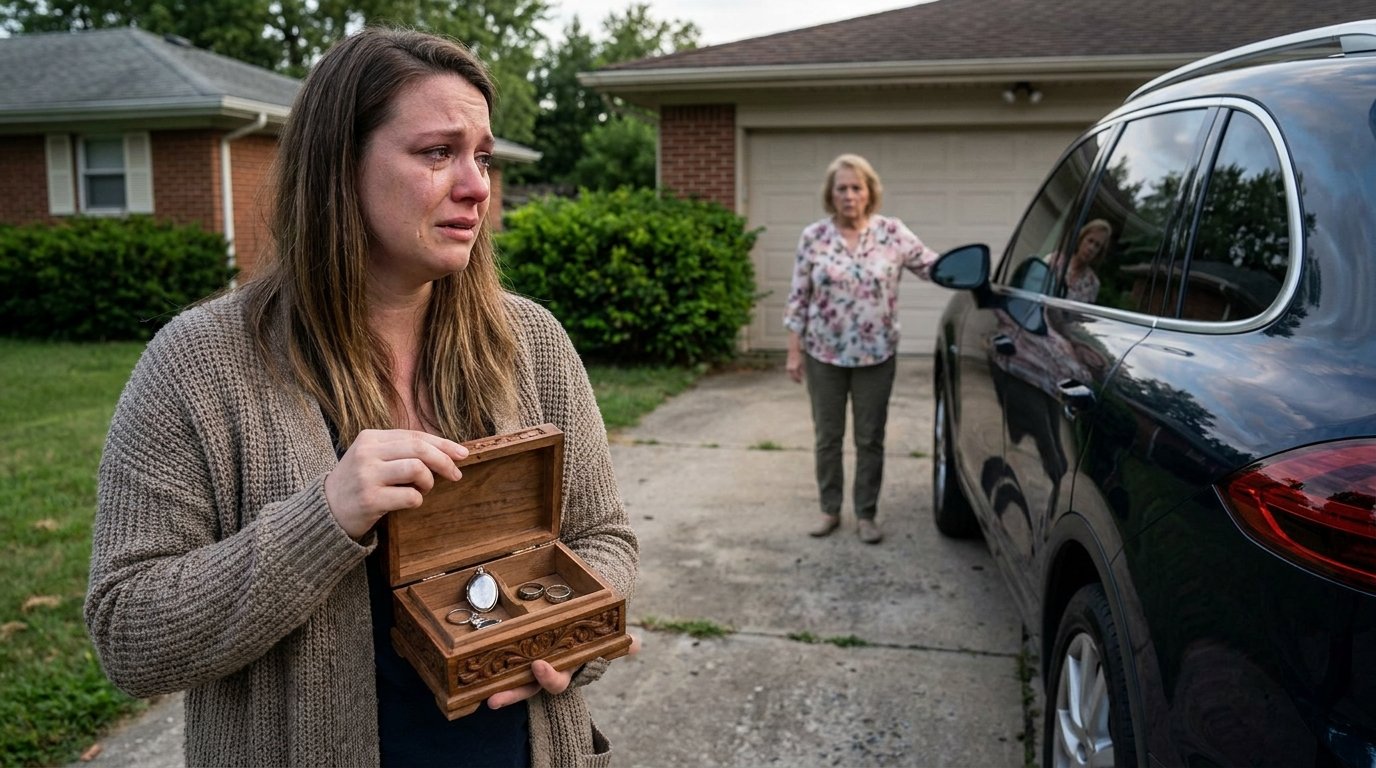
And there was a small wooden jewelry box she kept hidden in her bedroom closet.
That box was the one thing I specifically told everyone I wanted.
My husband knew.
My sister knew.
My mother-in-law knew.
I remember saying it at the funeral reception.
“I’m not ready to go through Mom’s things yet, but when I am, I want the jewelry box.”
My MIL, Linda, squeezed my shoulder.
“Of course, sweetheart. Nobody would touch it.”
I believed her.
A few months later, my husband and I had to move temporarily because of renovations at our house.
His mother offered to store some of my mother’s belongings in her spare bedroom.
I hesitated.
But my husband said, “Mom’s house is safe. You don’t have to worry.”
So I gave her several boxes.
Including the jewelry box.
That was my mistake.
When we finally moved back, I opened the boxes.
The photographs were there.
The letters were there.
My mother’s scarves were there.
But the jewelry box was empty.
At first I thought I had misplaced the jewelry.
I searched every box.
Every drawer.
Every closet.
Nothing.
I called Linda.
“Did you move Mom’s jewelry somewhere?”
There was a pause.
“What jewelry?”
“The jewelry from the wooden box.”
Another pause.
“Oh. That old stuff?”
My stomach dropped.
“What do you mean, ‘old stuff’?”
She sighed.
“I thought you didn’t want it.”
“I specifically told you I wanted it.”
“Well, I didn’t know.”
“You were literally storing it.”
She became defensive immediately.
“Don’t accuse me of stealing from you.”
“I didn’t accuse you.”
“You’re making me feel like a criminal.”
Then she hung up.
That night I asked my husband.
He immediately defended her.
“Maybe she misunderstood.”
“How do you misunderstand someone asking for their mother’s jewelry?”
“I don’t know.”
“Can you ask her?”
He did.
Then he came into our bedroom twenty minutes later looking pale.
“What?”
He sat down.
“Mom sold some of it.”
I stared at him.
“Some?”
He looked away.
“All of it.”
I couldn’t speak.
“How much?”
“She didn’t say.”
I called Linda myself.
She finally admitted she had taken the jewelry to a pawn shop.
But then came the part that made my hands shake.
She hadn’t used the money for bills.
She hadn’t needed surgery.
She hadn’t been struggling.
She had used the money as part of the down payment on her new SUV.
The same SUV sitting in her driveway.
I drove over there.
Linda came outside.
I pointed at the vehicle.
“You bought this with my mother’s jewelry?”
She folded her arms.
“Not all of it.”
“How much?”
“About eleven thousand dollars.”
I actually laughed.
Not because anything was funny.
Because eleven thousand dollars sounded absurd.
My mother had spent decades collecting those pieces.
Linda had turned them into a car payment.
“You had no right.”
“They were sitting unused!”
“They were not yours!”
She rolled her eyes.
“You weren’t even using them.”
“That doesn’t make them yours.”
Then she said something I’ll never forget.
“Well, your mother isn’t coming back for them.”
That sentence changed everything.
My husband stepped between us.
“Mom. Stop.”
Linda looked at him.
“What? It’s true.”
“No,” he said. “What’s true is that you stole from my wife.”
She became furious.
She accused me of destroying the family over “some jewelry.”
Then she said the car wasn’t entirely paid for with the jewelry money anyway.
That part was true.
I contacted the pawn shop.
They confirmed the sale.
I couldn’t recover everything, but I was able to identify several pieces.
The sapphire ring had been melted down.
The bracelet had been sold to another buyer.
The pearl earrings were still in inventory.
I bought those back.
The rest was gone.
But something else happened.
While going through my mother’s old paperwork, I found photographs of every piece of jewelry.
My mother had documented them for insurance purposes.
We had enough evidence to prove exactly what had been taken.
My husband confronted his mother again.
This time, he didn’t defend her.
He demanded she repay the full value.
She refused.
So we took legal advice.
The situation became uglier.
Linda told relatives that I was trying to “punish an elderly woman.”
Some family members believed her.
Others didn’t.
Eventually, she agreed to sell the SUV and repay me.
She hated every second of it.
But she did it.
The money couldn’t bring my mother’s jewelry back.
It couldn’t restore the pieces that had been melted down.
But at least Linda couldn’t keep the car she bought with them.
My husband and I are no longer in contact with her.
People keep asking whether I think that’s extreme.
Maybe it is.
But I don’t think this was ever about jewelry.
It was about trust.
I handed my mother’s memories to someone because I believed she was family.
She looked at those memories and saw a down payment.
And the hardest lesson I’ve learned from all of this is that sometimes the person who says, “You can trust me,” is exactly the person you should have been careful with.